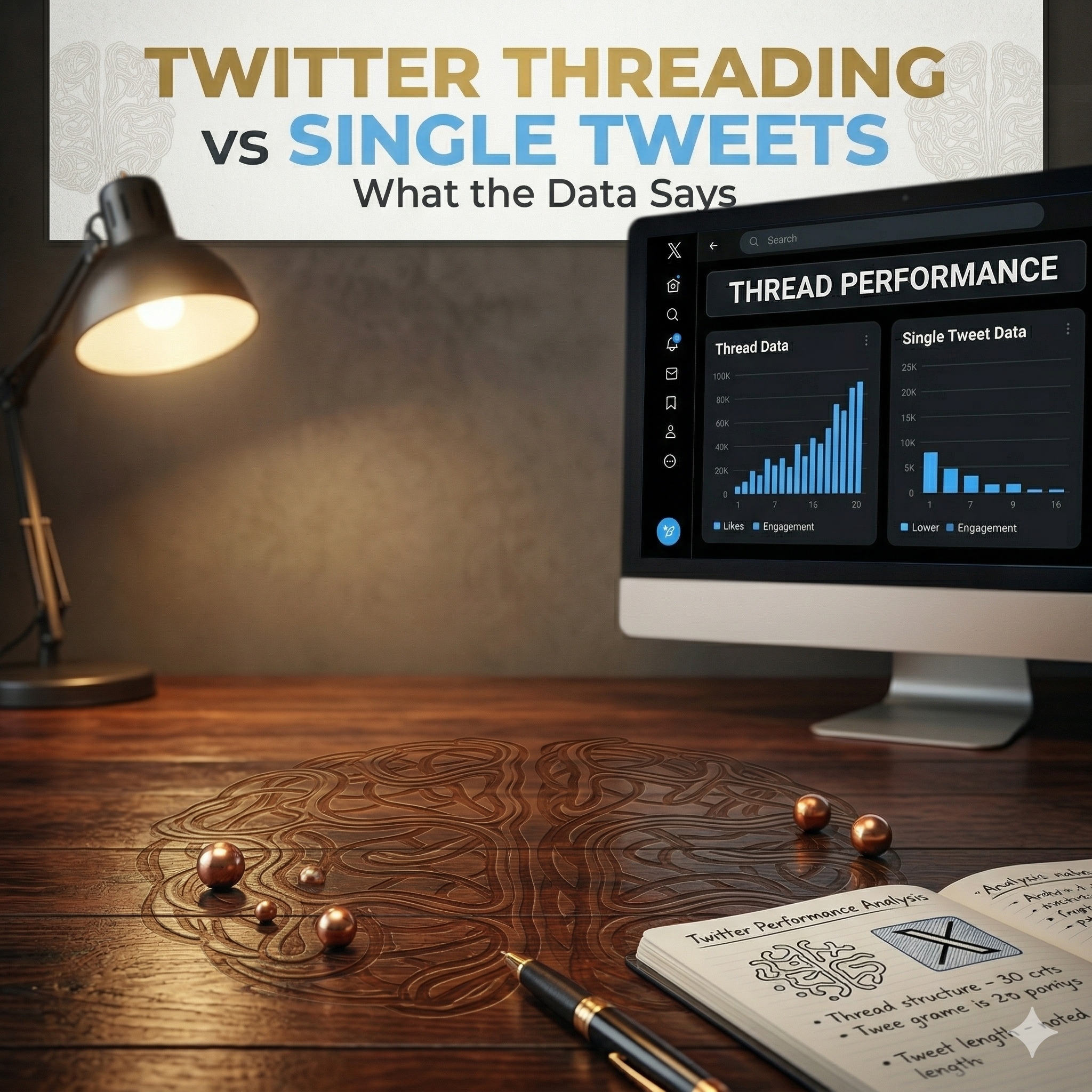
Twitter Threading vs Single Tweets: What the Data Says
When to post a thread and when one short post wins.
Twitter Threading vs Single Tweets: What the Data Says
Should you pack your idea into one punchy tweet — or unroll it into a thread? It is one of the most debated questions on X (formerly Twitter). The answer is not what most creators expect.
The Platform Has Changed. The Strategy Has Too.
Twitter rebranded to X in 2023, introduced longer posts, and reshuffled its algorithm multiple times. Yet the core debate remains: is a well-crafted single tweet more powerful than a carefully built thread?
The short answer: it depends on your goal. Reach and impressions favour single tweets. Depth, authority, and follower conversion favour threads. Understanding when to use each format is what separates accounts that grow from accounts that plateau.
Let us break it down with what the data actually shows.
What the Data Shows About Single Tweets
Single tweets — especially short, punchy ones under 100 characters — consistently outperform longer posts on raw impressions. The algorithm pushes content that gets fast engagement, and single tweets generate that faster because they require zero commitment from the reader.
Single tweets perform best when they are:
- Opinion-led: A bold take that people instantly agree or disagree with
- Relatable: Something your audience thinks but has not said out loud
- Timely: Reacting to a trend, news event, or viral moment within the first hour
- Funny: Dry wit, a sharp observation, or an unexpected comparison
- Quotable: Something worth screenshotting and sharing elsewhere
Single tweets have a shorter engagement window — typically 30 to 90 minutes of peak reach. But within that window, a great single tweet can dramatically outperform a thread on impressions alone.
What the Data Shows About Threads
Threads (the Twitter format, not Meta's platform) have a longer engagement tail. Because readers spend more time inside a thread, dwell time increases — and X's algorithm has historically rewarded dwell time with sustained reach over hours, not just minutes.
Threads consistently outperform single tweets on:
- Profile visits and follows — readers who finish a thread are far more likely to follow than those who liked a single tweet
- Saves and bookmarks — long-form value content gets saved for later at much higher rates
- Link clicks — threads allow you to warm up the reader before the CTA, dramatically improving click-through
- Authority signals — a well-researched thread positions you as a credible expert in a way a single tweet cannot
Studies from social analytics platforms consistently show that threads generate 2–3x more profile visits per post than single tweets, even when the single tweet gets more raw impressions.
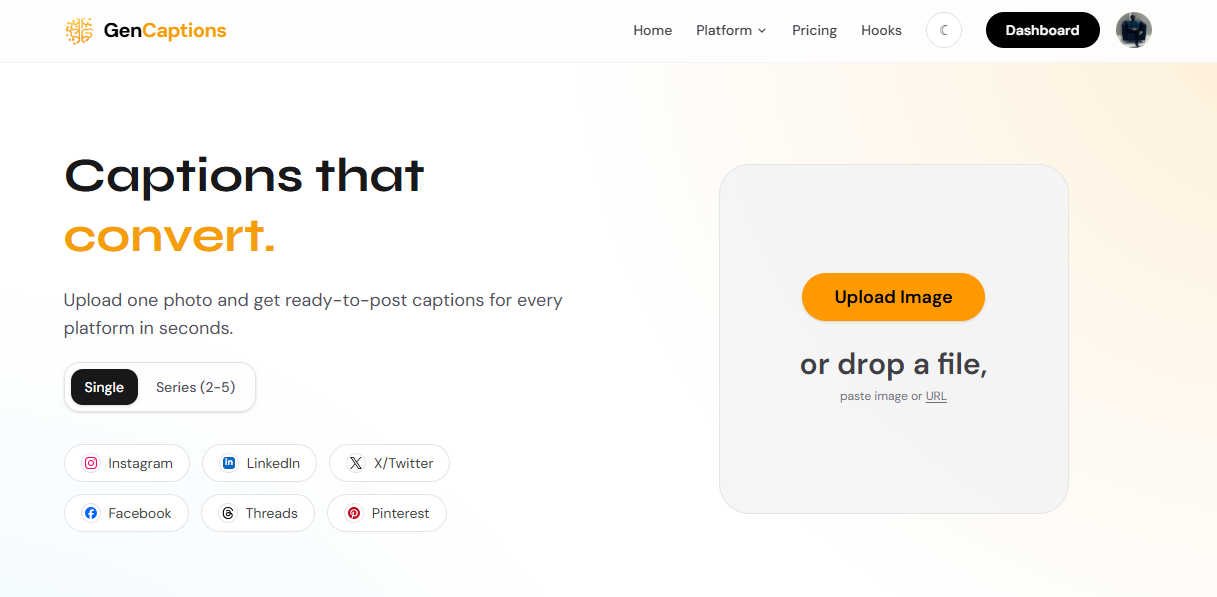
Step 1 — Write Your Hook First on GenCaptions
Whether you choose a single tweet or a thread, the opening line is everything. A weak hook on a thread means nobody reads past tweet one. A weak single tweet just gets ignored. GenCaptions.com helps you nail the opening — describe your topic, pick your goal, and get hook options that are built to stop the scroll.
Single Tweet vs Thread: A Side-by-Side Comparison
| Factor | Single Tweet | Thread |
|---|---|---|
| Raw impressions | Higher | Lower |
| Engagement window | 30–90 minutes | Several hours |
| Profile visits | Lower | 2–3x higher |
| Follower conversion | Lower | Higher |
| Link click-through | Lower | Higher |
| Best for | Reach, virality, trend participation | Authority, follows, conversions |
| Time to create | Minutes | 30–60 minutes |
The Winning Strategy: Use Both With Intent
The accounts growing fastest on X are not choosing one format over the other — they are using both strategically. Here is a simple framework:
- Post single tweets daily for reach, trend participation, and top-of-mind presence
- Post one thread per week to build authority, demonstrate expertise, and convert casual readers into followers
- Use your best-performing single tweets as thread starters — if a tweet gets high engagement, expand it into a full thread the following week
"Think of single tweets as your billboard and threads as your landing page. Both are necessary. Neither replaces the other."
How to Structure a High-Performing Thread
A thread is only as good as its architecture. Here is the structure that consistently performs:
- Tweet 1 — The hook: Bold claim, surprising stat, or a question that demands an answer. This is the only tweet most people will see — make it irresistible.
- Tweet 2 — The promise: Tell them exactly what they will learn or get by reading the rest. Set expectations and create commitment.
- Tweets 3–8 — The value: One idea per tweet. Short paragraphs. Use numbered points to signal progress ("3/8") so readers feel momentum.
- Tweet 9 — The summary: Recap the three most important takeaways. This tweet often gets reshared on its own.
- Tweet 10 — The CTA: Follow for more, link to a resource, or ask a question. One clear ask. Never two.
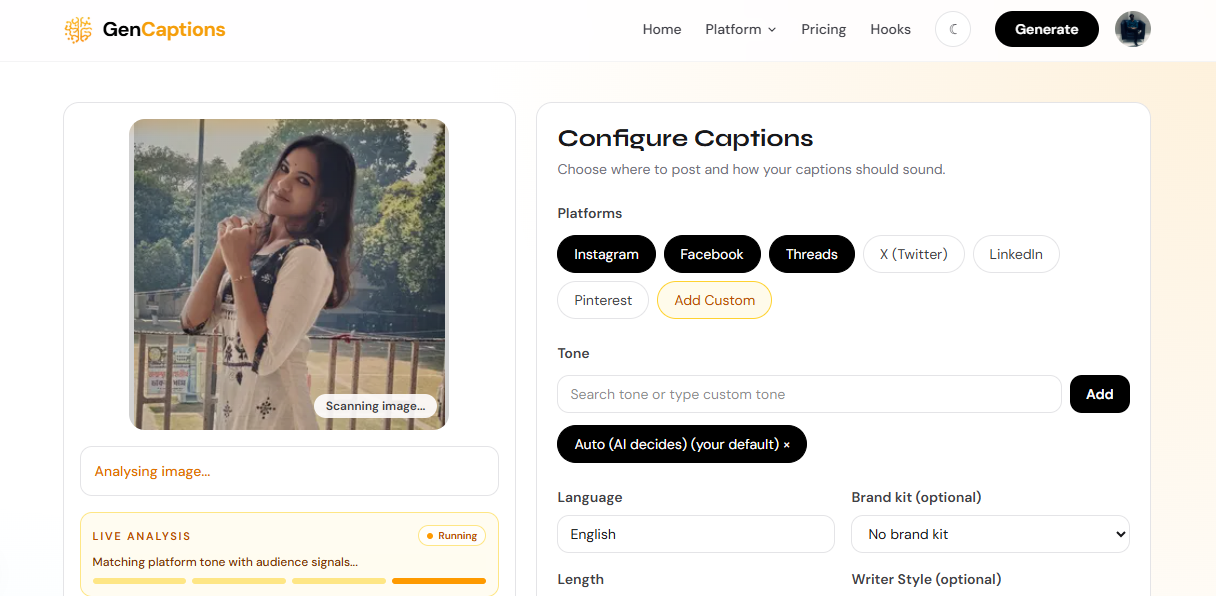
Step 2 — Choose Your Caption Format
Once you know whether you need a single punchy tweet or a thread opener, GenCaptions lets you select the format and tone before generating. This means the output is already calibrated for the right length, energy, and structure — saving you significant editing time.
Common Thread Mistakes That Kill Performance
- A weak tweet one. If the first tweet does not create curiosity or urgency, nobody clicks "show this thread." Everything else is wasted.
- Too many tweets with too little value. Padding a thread to 15 tweets when 7 would do signals that you value length over substance.
- Burying the CTA in tweet three. CTAs belong at the end, after you have delivered the value. Asking for a follow before earning it never works.
- No visual breaks. Walls of text inside a thread feel exhausting. Use line breaks, numbered lists, and short sentences to keep each tweet scannable.
- Posting the thread and disappearing. Reply to every comment in the first hour. Thread engagement compounds when you are actively in the conversation.
Managing a Twitter Content Strategy at Scale
If you are running Twitter content for a brand, agency, or multiple clients, the single tweet versus thread decision needs to be built into your content calendar — not made on the fly. A consistent posting mix, paired with clear brand voice guidelines, is what turns X into a reliable growth channel. If you need strategic support building that system, Whatznot specialises in social content strategy that scales without losing quality or voice.
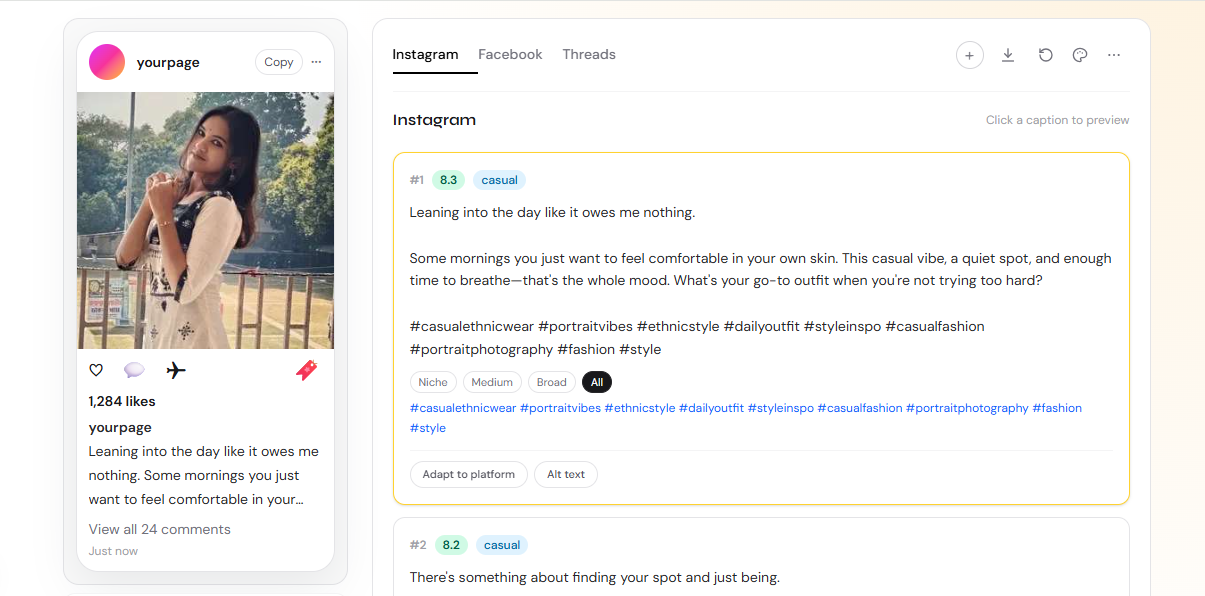
Step 3 — Copy and Post in Seconds
Whether it is a single tweet or a thread opener, GenCaptions.com gets you from blank screen to ready-to-post in under a minute. Copy the output, make one or two personal tweaks, and post. If the first option does not land right, regenerate instantly.
The Bottom Line
Single tweets win on reach. Threads win on depth and conversion. The smartest X strategy uses both — daily single tweets for presence, weekly threads for authority.
Master the hook, respect the format, and let the data guide your mix. Then use GenCaptions.com to make sure every tweet and thread opener is strong enough to earn the read.
Try GenCaptions free today and write your next thread in half the time.
About this article
This guide is part of the GenCaptions editorial library focused on better hooks, stronger positioning, and faster caption workflows for modern social teams.